






















Ever tugged at a jacket zip halfway through a shift and felt the little metal tab snap clean off in your hand? It’s one of those small, annoying moments that always seem to happen at the worst time. If you’ve searched for zipper pull replacement advice before, you’ll know how many “quick fixes” end up making the problem worse rather than better. Before you grab the first pull you can find and start pulling at your garment, it helps to know exactly where most people go wrong.
Here’s what we’re going to walk through, so you can sort it properly the first time and know exactly when it’s worth ordering to buy zip puller replacements instead of reaching for tape.
What Does Zipper Pull Replacement Actually Involve?
The little tab you grip when you open or close a zip has a proper name, it’s called a slider pull, and when it snaps, cracks, or slips loose, you don’t usually need a whole new zip. In most cases, a straightforward zip pull replacement solves the problem in just a few minutes.
- It swaps only the small metal or plastic tab, not the full zip track
- It works on jackets, trousers, aprons, and most workwear pieces
- It’s usually far quicker and cheaper than sending garments away for a full zip repair
- It keeps your team’s uniforms looking smart instead of held shut with tape or string
Mistake 1: Grabbing Any Pull Without Checking the Size
Many people assume one zip pull fits every zip. You might feel this is the fastest fix, but not every slider matches every zip, and forcing the wrong one on tends to damage the track further.
- Check whether your zip is a No.3, No.5, or No.8 gauge before buying anything
- Measure the width of the zip teeth rather than just the old pull
- Note whether your zip uses a coil, nylon, or metal tooth style
- If you’re unsure, a universal zipper pull replacement built for multiple gauges is a safer bet than guessing
Mistake 2: Forcing the New Pull On Instead of Fitting It Properly
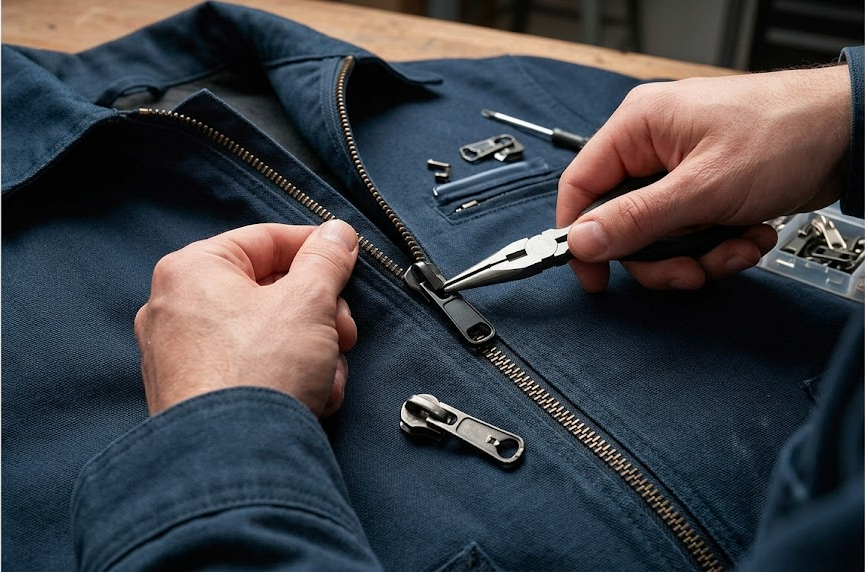
Rushing this step is where most people run into trouble. A new slider needs to be opened and guided into place gently, not hammered or yanked onto the zip.
- Squeeze open the small hook on the new slider carefully with pliers first
- Slide it onto the zip track slowly rather than yanking it into place
- Line the pull up with the teeth before pressing it down
- Test the zip a few times before the garment goes back into use
Mistake 3: Focusing on the Pull When the Real Problem Is the Teeth
Sometimes people think they simply need to replace zipper pull hardware when the actual issue sits with the teeth themselves. A shiny new pull won’t fix a track that’s already damaged.
- Run a finger along the zip teeth to check for gaps or bends
- If teeth are missing near the top or bottom, a new pull alone won’t help
- Bent teeth can sometimes be straightened gently with pliers before refitting
- A badly worn zip track usually needs a full zip swap, not just a replacement zipper pull
Mistake 4: Trying to Manage With Fingers Alone
Fiddly zip work is much harder without the right tools, and rushing it with bare fingers is a common way to end up with a broken zipper pull replacement that doesn’t sit properly.
- Small needle nose pliers give far more control than fingers alone
- A flat head screwdriver helps open stiff pull hooks
- Fabric scissors are handy for trimming loose threads caught in the track
- Keep a small dish nearby so tiny pieces don’t roll off and get lost
This is especially worth doing properly on heavier items like work jackets, where the zip takes more strain day to day and a rushed fix tends not to last.
Mistake 5: Assuming a Full Swap Is Always Needed
Sometimes the pull doesn’t need swapping at all, it just needs a bit of attention. In plenty of cases, you can repair a broken zipper without replacing it, which saves time and hassle.
- Try lubricating the track with a little soap or wax to ease stiffness
- Realign a slider that’s come off track before assuming it’s beyond saving
- Gently pinch a loose slider with pliers if it keeps skipping teeth
- Only move on to a fix zipper pull swap once realignment hasn’t worked
Quick Reference: Mistakes and Fixes
| Mistake | Why It Happens | What Helps Instead |
| Wrong size pull | Assuming one size fits all zips | Check the zip gauge before buying |
| Forcing the pull on | Rushing the fix | Open the hook gently with pliers |
| Ignoring the teeth | Focusing only on the pull itself | Inspect the whole track before fitting a new pull |
| Using fingers only | No tools close to hand | Keep small pliers and a screwdriver handy |
| Full swap too soon | Assuming it’s always beyond repair | Try realigning or lubricating the track first |
Knowing how to replace a zipper pull properly, rather than rushing the job, is really what separates a fix that lasts from one you’ll be redoing next week.
Quick Tip: Keep a small repair kit on site, a few spare pulls, needle nose pliers, and a bit of wax or soap, so a snapped zip never means a garment is out of action for the day. A two minute fix on the spot beats sending a jacket away and waiting on a replacement.
Getting Your Team’s Workwear Zips Sorted for Good
If your crew is constantly dealing with worn out zips on site, it’s worth keeping a few spares on hand before the next one snaps mid shift. If you’re due a wider refresh anyway, one of our workwear bundles can save you the hassle of patching things up piece by piece.
Frequently Asked Questions
How do you replace a zipper pull without replacing the whole zip?
Open the hook on the new slider with a small pair of pliers, slide it onto the existing zip track, then line it up with the teeth and press it closed. As long as the track and teeth are still in good shape, you only need to swap the pull itself.
What size zip pull do I need for a work jacket?
It depends on the zip gauge, usually No.3, No. 5, or No. 8 on most workwear. Check the width of the existing teeth before ordering, or choose a universal option designed to fit several common sizes.
Can you repair a broken zipper without replacing it?
Often, yes. Loose or stiff zips can sometimes be fixed by lubricating the track, realigning the slider, or gently pinching it back into shape, without buying a new pull at all.
How much does a zipper pull replacement usually cost?
Individual pulls are inexpensive, often just a few pounds for a set, which makes them far more cost effective than replacing an entire garment because of one broken tab.