










Have you ever pulled your boots off after a long shift and noticed your toes throbbing, your socks soaked through, or your ankle feeling a bit off, even though you were wearing what your job calls safety gear? Many people experience this and attribute it to a hard day’s work.
The truth is, not all protective footwear actually protects you the way it’s meant to, and this guide walks you through what to check and how to know if your current pair is genuinely doing its job.
What does protective footwear actually mean?
When people talk about safety footwear, they mean shoes or boots built to guard your feet against real job site hazards: falling objects, sharp debris, wet floors, or heavy equipment rolling past. It isn’t just a heavier boot with a logo stamped on the side. It’s a tested safety kit, built to withstand the pressure that everyday shoes were never designed for.
- Reinforced toe caps, made from steel or composite, that resist crushing impact
- Puncture resistant soles that stop nails or sharp debris from getting through
- Slip resistant outsoles built for wet, oily, or uneven floors
- Ankle support that reduces the chance of twists on rough ground
- Durable, breathable materials that hold up to daily wear and washing
If your current pair is missing more than one of these, it might be time to buy protective footwear that’s actually built for the work you do, rather than settling for whatever was on the shelf.
The warning signs your workplace safety footwear isn’t cutting it
Boots don’t fail all at once, they wear down slowly, and most people don’t notice until something goes wrong. Your workplace safety footwear should feel supportive from the first hour of your shift to the last, not just when it’s brand new.
- Soles feel flat, smooth, or slippery in the middle where you walk the most
- The toe cap feels loose, cracked, or dented from a past knock
- Your feet ache, swell, or go numb well before your shift ends
- Safety markings inside the boot have worn away or become unreadable
- You’ve had a near slip or stumble more than once in the past month
Quick tip: if your boots have visible cracks in the sole or are past their marked working life, replace them even if they still look fine from the outside. A worn sole is one of the most common reasons behind workplace slips.
Why toe protection shoes matter more than people realize
A crushed toe isn’t a small injury, and it’s a common reason people end up filing a workplace claim. Toe protection shoes are built to take that hit so your foot doesn’t have to.
- Steel toe caps handle heavier impact but add extra weight to the shoe
- Composite toe caps are lighter and don’t conduct heat or cold like metal does
- Both types are tested to withstand a set amount of compression force before failing
- A dented or cracked toe cap loses most of its strength instantly, even if it looks intact
- Toe protection should never be an afterthought when you’re choosing new boots
Slip resistant footwear and the floors you actually walk on
Grip matters just as much as impact protection, especially if your job has you moving between wet or oily surfaces all day. Slip resistant footwear is designed around the floors people actually work on, not a showroom tile.
- Rubber outsoles with deep, wide tread channels grip wet surfaces far better
- Oil resistant soles matter most in kitchens, garages, and food production areas
- Worn tread loses its grip long before the rest of the boot starts to look old
- Slip resistance ratings vary by role, so check what your environment actually needs
- Even a good sole needs regular cleaning to keep its grip working properly
Safety footwear tends to work best as part of a complete, well fitted uniform. If your team is already due for a fresh work polo shirt order, it’s a good moment to check everyone’s footwear too.
How work footwear safety standards decide what’s genuinely safe
Most footwear sold for work is tested against a recognised safety standard, and the label stitched inside your boot tells you what protection you’re actually getting.
- SB is the base safety rating, mainly covering toe protection
- S1 adds antistatic properties and shock absorption around the heel
- S3 builds on S1 with a puncture resistant sole and water resistant uppers
- The rating is usually stamped or stitched inside the boot, not printed on the box
- Ask your supplier which rating actually suits your specific working environment
Understanding work footwear and safety standards makes it easier to take the guesswork out of buying, so you can choose based on what your job demands rather than what looks rugged on a shelf.
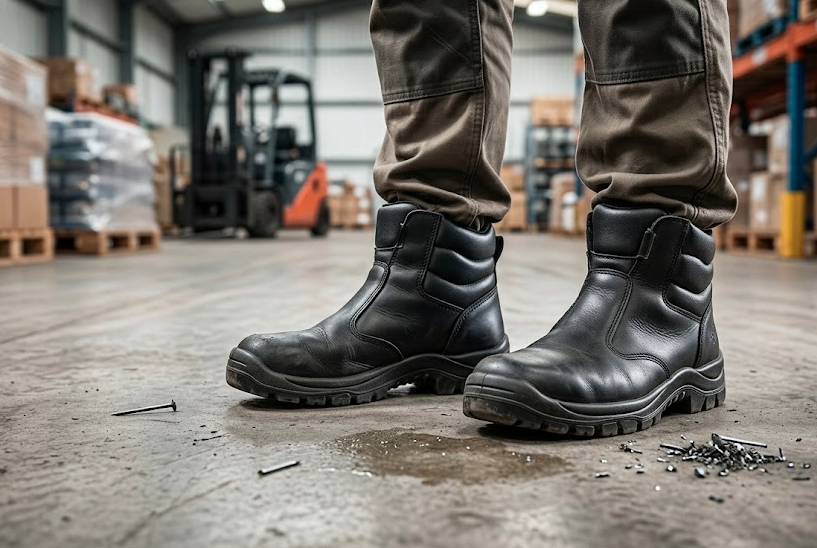
Imagine someone working a full shift in a warehouse who steps on a stray staple that goes straight through a worn out sole. It’s a small object, but it causes a real problem, and it’s exactly what proper safety boots are designed to stop.
Protective Footwear: What to Check
Here’s a quick way to check your current pair.
| What to check | Why it matters | Good sign |
| Toe cap condition | Protects against crush injuries | No cracks, dents, or looseness |
| Sole tread | Keeps you steady on wet or oily floors | Deep, even tread with no smooth patches |
| Safety marking | Confirms tested protection level | Clear, readable label inside the boot |
| Fit and comfort | Prevents fatigue and long term foot strain | Snug but not tight, no pressure points |
| Age and wear | Materials weaken over time | Within its marked working life |
Choosing protective work shoes that tick every box on this table gives you a genuine layer of protection you can rely on, shift after shift.
Your feet carry the whole shift, so treat them that way
Protective footwear only works if it’s genuinely right for your job, your floor, and your feet. A quick check now and then can save you from sore feet, near misses, or worse.
If you’d like help choosing the right fit for your team, contact us and we’ll walk you through the options that suit your industry.
FAQs
How often should safety boots actually be replaced?
Most safety footwear is built to last a set number of months under regular wear, but heavy use changes that fast. Once the tread wears smooth or the toe cap shows damage, it’s time for a new pair regardless of how long you’ve had them.
What’s the real difference between steel toe and composite toe boots?
Steel caps offer strong impact resistance but add weight and can feel cold in winter. Composite caps are lighter and don’t conduct temperature the same way, while still meeting the same safety testing.
Can steel toe boots feel comfortable for a full shift?
They can, as long as the fit is right and the boot has proper cushioning built in. Poor fit, not the steel itself, is usually what causes discomfort by the end of a long day.
Do slip resistant soles wear out over time?
Yes, and it happens gradually enough that many people don’t notice until they’ve already slipped. Checking the tread pattern every few months is the easiest way to catch it before it becomes a problem.